
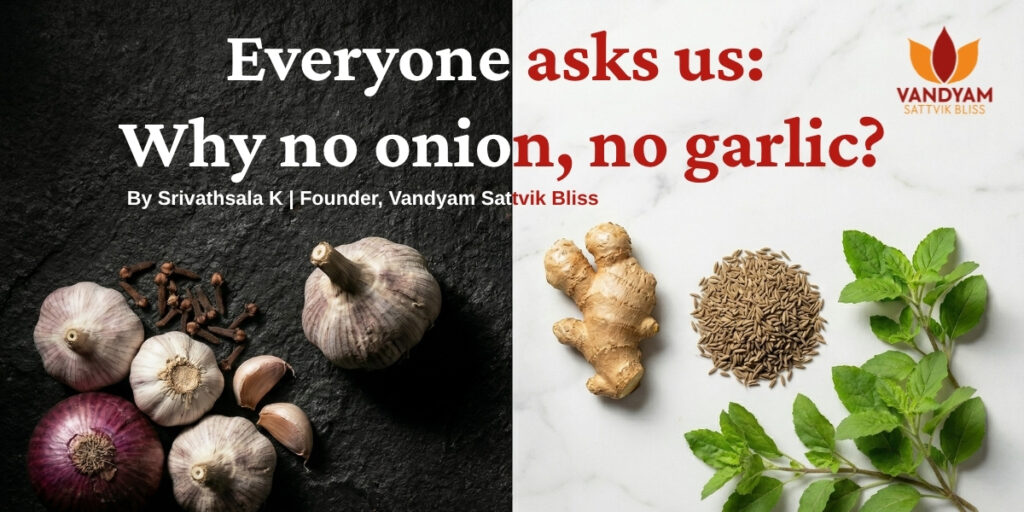
It is the first question almost every new customer asks, and it is a valid one. Onion and garlic are present in nearly everything we eat today — in restaurants, in packaged foods, and in home cooking. Removing them feels like a radical step.
But this is not a recent dietary trend. The answer is thousands of years old.
WHAT THE GITA TELLS US
The Bhagavad Gita classifies all food into three categories — Sattvik, Rajasic, and Tamasic — based on their effect on the mind, not just the body.
| “āyuḥ-sattva-balārogya-sukha-prīti-vivardhanāḥ rasyāḥ snigdhāḥ sthīrā hṛdya āhārāḥ sāttvika-priyāḥ” Foods dear to those in Sattva increase life, purity, strength, health, happiness, and satisfaction. — Bhagavad Gita 17.8 |
Both onion and garlic are Tamasic. They belong to the mode of darkness and inertia. Here is what that means in practice:
WHAT TAMAS DOES TO THE MIND AND BODY
| T | Onion — Tamasic Onion increases dullness, inertia, and heaviness in the body and mind. It clouds consciousness, dulls the senses, and draws the mind toward lethargy and confusion. The more it is consumed, the harder it becomes to maintain mental clarity and emotional steadiness. |
| T | Garlic — Tamasic Garlic too is Tamasic — it increases inertia, heaviness, and dulls the subtler faculties of the mind. In Ayurveda, it is used medicinally in specific conditions. But as daily food, it works against the inner clarity and calmness that Sattvik living seeks to build. |
| Tamas is the quality of darkness, inertia, and heaviness. Food that carries it does not just affect digestion — it affects how clearly we think, how peacefully we feel, and how deeply we sleep. |
WHY TEMPLE KITCHENS HAVE ALWAYS KNOWN THIS
Temple kitchens — from Tirupati to Udupi to Puri — have never used onion or garlic in their prasadam. Not as a rule imposed from outside, but as wisdom accumulated over thousands of years: food offered to the Divine, and eaten by those seeking clarity and devotion, must be free of anything that dims the mind.
When you eat without them regularly, something shifts — quietly, within a few days. The heaviness after meals diminishes. The mind feels less scattered. Sleep comes more easily.
That is Tamas leaving the system. And Sattva taking its place.