
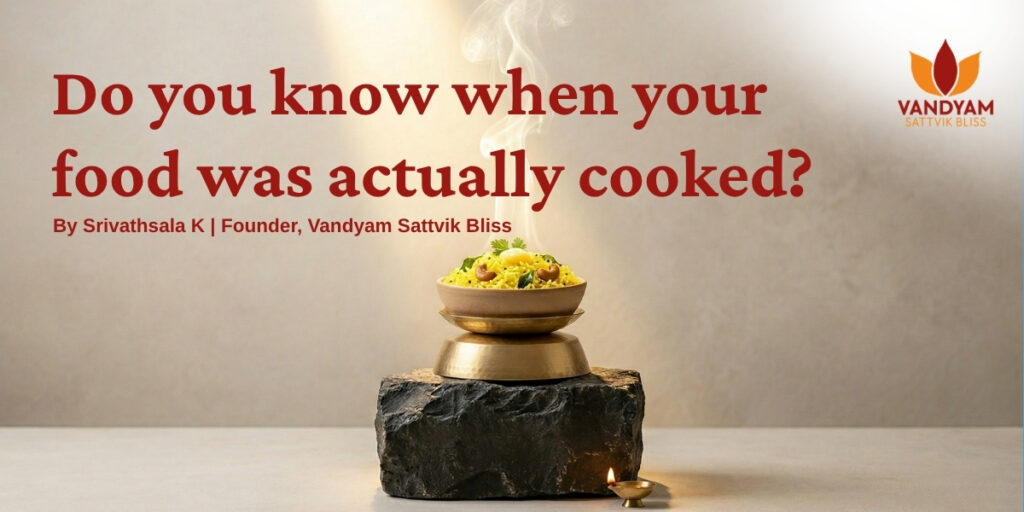
Most of the food you order today was cooked hours ago. Sitting in containers. Waiting. By the time it reaches you, the prana — the life force — is already gone.
The Chandogya Upanishad says it plainly:
| “Aahara Shuddhau Sattva Shuddhih.” When the food is pure, the mind becomes pure. |
Purity isn’t just about ingredients; it’s also about timing. Freshly cooked food and food that’s been standing for six hours differ — not in nutrition or flavour, but in how they influence your mind.
THE UPANISHAD GOES DEEPER
Every food we eat, after digestion, is divided into three parts:
| 1 | Sthūla — The gross part This becomes waste. The body recognises it has no further use and expels it. The heaviest, densest fraction of what we eat. |
| 2 | Madhyama — The middle part This becomes flesh, tissue, blood, and bone. It rebuilds and sustains the physical body. What we are made of, literally, is this portion of all the food we have eaten over a lifetime. |
| 3 | Sūkṣma — The subtlest part This becomes the Manas — the mind itself. The finest, most refined essence of the food rises and shapes our thoughts, our clarity, our emotions, and our consciousness. |
| Now ask yourself: what quality of Sūkṣma remains in food that was cooked six hours ago, held in a container, and reheated before reaching you? |
Freshness is not merely a preference for comfort. In the Vedic view, freshness refers to the condition in which the most subtle part of food remains alive. As food ages, the gross part persists — but the Sūkṣma, which becomes your mind, diminishes first.
This is the oldest reason to eat freshly cooked food. Not convenience. Not taste.
The mind you are building, one meal at a time.